An old workshop with a new use
A library imagined inside a brick workshop raises a precise question: which parts of the existing building can support its next use?

· 2 min read
Keep the evidence, investigate the damage
A blocked opening, a line of fixings and a change in brickwork may explain how a workshop was used. They may also conceal repairs or damage. A survey has to distinguish between those possibilities before a designer decides which marks to retain.
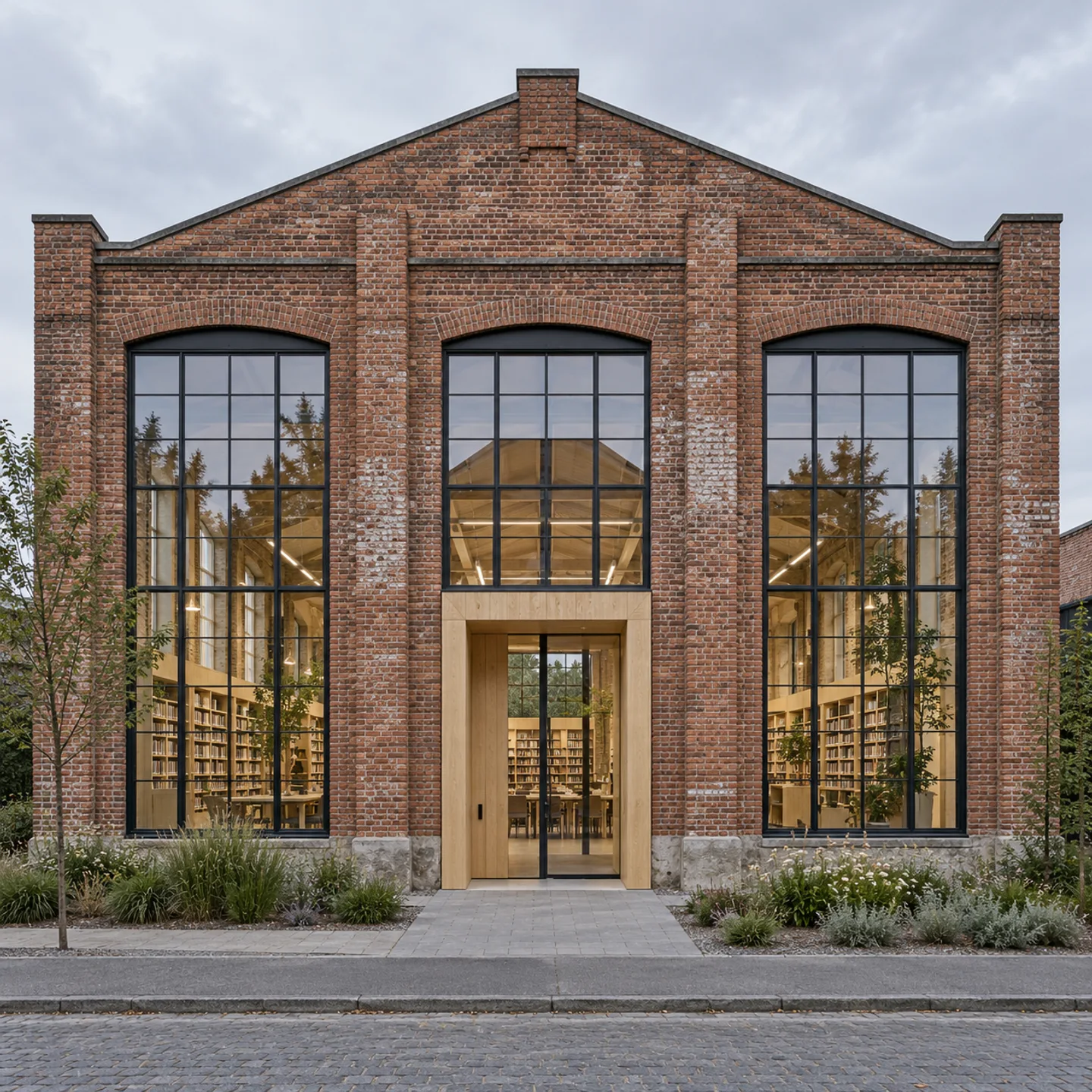
In this illustrative conversion, the tall window bays establish the library’s arrangement. A smaller timber entrance occupies one bay without erasing its outline. It proposes a clear way into the building while keeping the scale of the workshop visible; it does not establish that the existing fabric is suitable for conversion.
The joint between brick and timber
The difference between the old brickwork and new joinery is easy to see. The harder work lies at their junction. The detail must accommodate the condition of the masonry, weather exposure, movement and eventual replacement of the timber components.
Keeping a wall does not demonstrate that it can carry a proposed load. Structural condition and the demands of the new use need specialist investigation. Findings should feed back into the design while there is still room to move an opening, reduce an intervention or choose another arrangement.
A public entrance on the pavement
A library visitor needs to find the entrance from either direction along the street. The timber insertion offers one possible marker. Its landing, shelter and relationship to the pavement would determine whether people can pause, read a notice and pass through without obstructing one another.
The entrance route should be resolved for all visitors as part of this main approach. An attractive frontage is a poor substitute for a clear arrival. Carry the drawing through to the first room inside, including where a wet coat, a returned book or a waiting companion might go.
Felix Ward
Felix writes about materials already in use. His pieces follow worn stair treads, repaired joints and the records that make the next repair easier.
About the contributor