A staircase worth keeping
A worn finish, a damaged tread and a loose joint call for different responses. Repair starts by identifying what has actually failed.

· 2 min read
What the worn tread can tell you
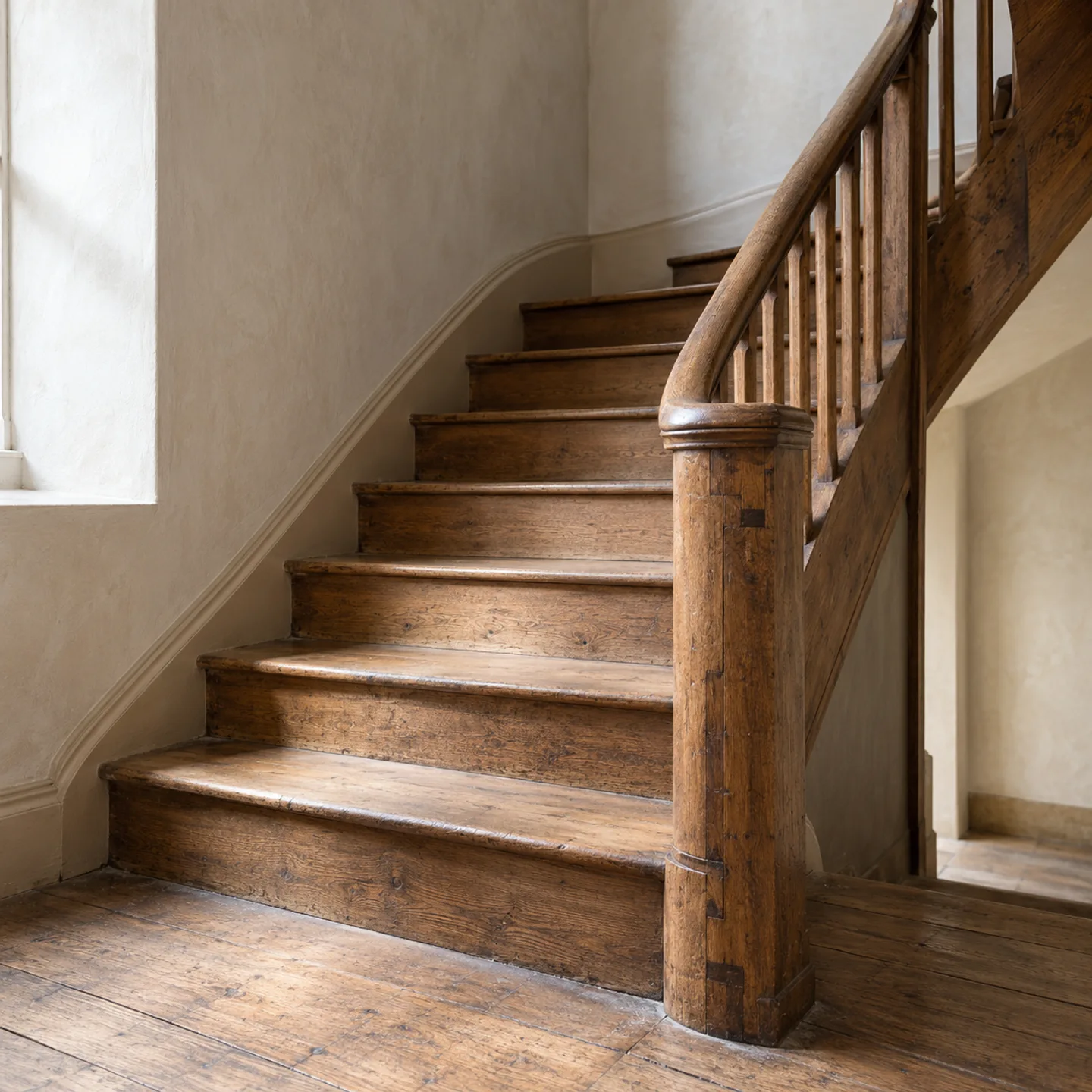
Wear tends to make a route visible. The centre of a timber tread may be smooth while its corners retain an older finish. That pattern is evidence of use, but it cannot establish whether the stair is sound. A loose joint and a polished surface need different kinds of attention.
A survey should record dimensions, assembly and condition, including parts hidden from the usual view. The intended use of the building also matters. Relevant access and safety requirements need to be checked before deciding that a familiar stair can continue unchanged.
One piece or the whole assembly?
Replacing one damaged tread sounds like a small job until its connections are examined. Can they be reached without dismantling sound parts of the stair? Will the replacement fit into the retained assembly? The extent of the work follows from those answers, rather than from a preference for making the stair look entirely new.
A new piece does not have to be artificially aged. The fit, profile and finish should allow it to work beside the retained timber. A visible difference can make the repair understandable without exaggerating it into a feature.
At the handrail and landing
A repair is encountered at close range. Fingers follow the underside of a rail as well as its top; a projecting joint that looks unobtrusive in a photograph may be uncomfortable to grasp. Inspecting the piece from the position of someone using it can expose details missed in an elevation.
Keep a record of the timber, finish and work carried out. That information gives the next repair a better starting point. A photograph of the completed stair is useful, but a note explaining how the new tread is fixed may prove more useful when it needs attention again.
Felix Ward
Felix writes about materials already in use. His pieces follow worn stair treads, repaired joints and the records that make the next repair easier.
About the contributor